
Quick Answer
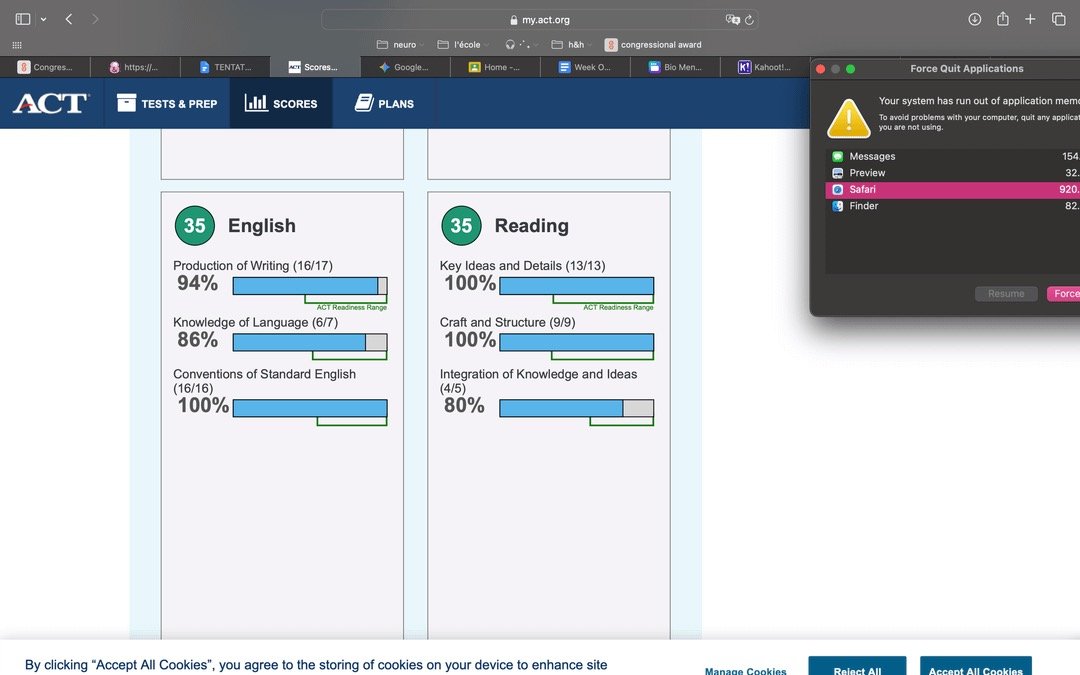
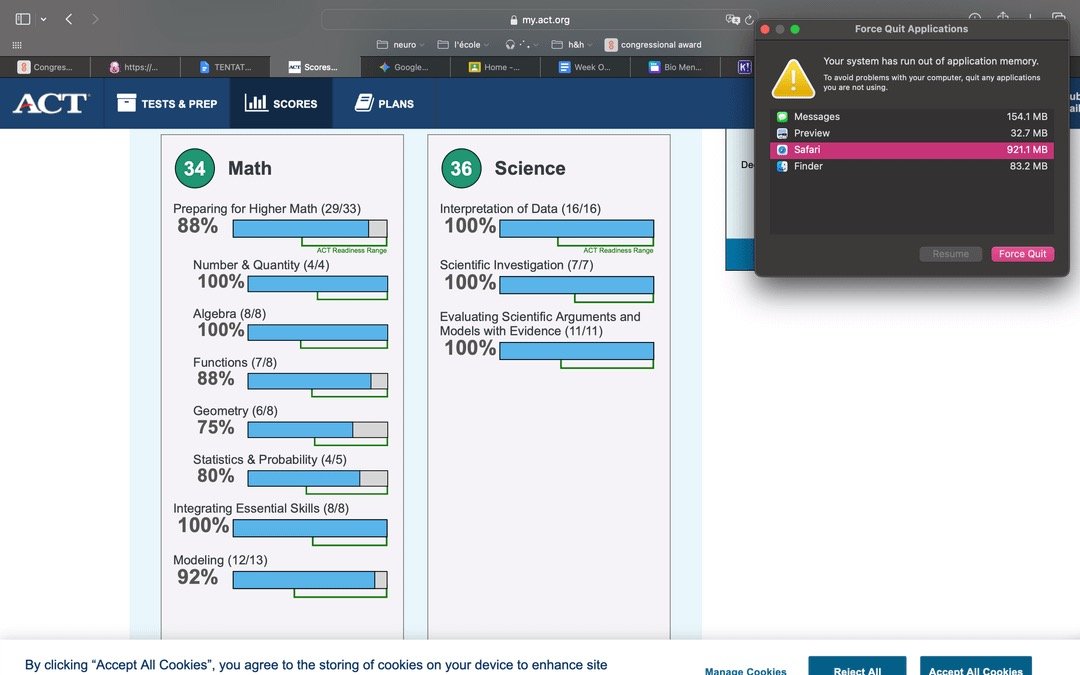
A Gangnam Prep student raised his ACT composite from a 23 diagnostic to an official 35 — English 35, Math 34, Reading 35, Science 36 — after nearly a year of stalled progress with two previous tutors. The breakthrough came not from new content but from diagnosing the real problem: a pacing issue that was turning solvable questions into careless errors. Three phases — English grammar mastery, reading-speed training, and science data-interpretation — followed by six weeks of timed full-length practice with disciplined error categorization produced a score that placed him in the top 1% of ACT test takers nationally. Gangnam Prep is based in Diamond Bar, CA with 17 years of experience helping students improve by 200+ using the Logic-First Framework™ and 3-Round Scan & Strike™ method.
Every score improvement we publish is a real student, a real diagnostic, and a real official ACT result — not a marketing average. This case study walks through exactly how one rising senior went from a 23 composite to a 35, including the official ACT score report, so other families considering ACT tutoring in Diamond Bar, CA and beyond can see what the process actually looks like week to week. At Gangnam Prep in Diamond Bar, CA, this progression is the foundation of the Logic-First Framework™ — a diagnostic-first method refined over 17 years of instruction, producing 200+ point average SAT improvements and results like this 12-point ACT composite gain. The 3-Round Scan & Strike™ review protocol is the execution layer that turned correct understanding into consistent, timed performance.
Olivia Bang has taught standardized tests full-time for 17 years, and this student’s trajectory illustrates something she has seen repeatedly: the highest-leverage gains for struggling students rarely come from learning more content. They come from finding the real bottleneck — and fixing that first.
In This Article
- The Starting Point: A 23 After a Year of Tutoring
- What I Saw Immediately: A Pacing Problem, Not a Knowledge Problem
- Phase 1: ACT English Mastery
- Phase 2: Reading Speed Training
- Phase 3: Science — The Data Interpretation Revelation
- Score Progression: Diagnostic to Official 35
- The Lesson: Why This Worked
- Frequently Asked Questions
The Starting Point: A 23 After a Year of Tutoring
This student came to me as a rising senior from a competitive private school in Southern California. He had already worked with two previous tutors over nearly a year — and his scores had not moved.
His parents were frustrated. His goal was ambitious.
His diagnostic scores were:
- ACT English: 22
- ACT Reading: 21
- ACT Science: 24
- ACT Math: 25
- Composite: 23
He was targeting a 34 or higher. Most people — including the tutors before me — told him that wasn’t realistic.
What I Saw Immediately: A Pacing Problem, Not a Knowledge Problem
After watching him take a full practice test, the issue was obvious — and it had nothing to do with the content he knew or didn’t know.
Every section followed the same pattern:
- He started carefully, working each question methodically
- He double-checked everything he finished
- He fell behind schedule
- He rushed the final 20–25% of questions
- He made careless errors in the questions he rushed
The questions he was missing in the final stretch? He almost certainly could have answered them correctly with adequate time. He wasn’t failing because he lacked knowledge. He was failing because he was spending too much time too early and then running out of clock.
This distinction matters enormously for how you structure a program. Throwing more content at a pacing problem doesn’t fix it. You have to restructure the approach to time first — which is exactly what we did.
Phase 1: ACT English Mastery
ACT English is one of the most structurally learnable sections on any standardized test. The rules are finite, consistent, and testable. A student who genuinely understands them can achieve near-perfect accuracy without relying on instinct or “ear.”
We spent several weeks working through every major rule the ACT tests:
- Commas — where they belong and where they don’t
- Semicolons and colons — the logic behind each
- Dashes — paired vs. single
- Verb tense — consistency and sequence
- Pronouns — agreement and antecedent clarity
- Conciseness — the ACT’s consistent preference for the shortest correct answer
His English score moved first and moved fast.
22 → 30
That single-section improvement added several points to his composite before we had touched Reading, Science, or Math in any serious way. It also gave him momentum — which matters more than people realize when a student has been stuck for a year.
Phase 2: Reading Speed Training
His Reading approach was the same approach that keeps many strong students stuck: he was reading every passage the way you read a novel. Cover to cover. Trying to absorb everything before answering.
That is not how the ACT Reading section works, and it is not a strategy that scales under time pressure.
We replaced it with a structured, more aggressive method:
- Read for structure, not content. What is each paragraph doing? Where does the argument shift?
- Track the author’s viewpoint. What does the author actually think about this topic?
- Ignore details on the first pass. The passage will still be there when a question asks about a specific detail.
- Return to evidence only when needed. The question tells you what to find. Go find it then.
He hated it at first. He felt like he wasn’t understanding the passage well enough to answer the questions. Then his scores started climbing anyway — because the questions don’t require full comprehension. They require accurate, targeted retrieval.
His Reading scores over the following weeks:
- 21 → 25 → 29 → 32
- Official: 35
Phase 3: Science — The Data Interpretation Revelation
The most common misconception about ACT Science is in the name itself. Students approach it like a biology or chemistry exam. They slow down to process the science. They try to understand the experiments before they engage with the questions.
This is almost always the wrong approach.
ACT Science is, in the overwhelming majority of its questions, a data-interpretation test. The scientific content is either provided in the passage or irrelevant. What the test actually rewards is the ability to:
- Read a graph quickly and accurately
- Interpret a data table
- Identify a trend across multiple figures
- Ignore scientific jargon that has no bearing on the question being asked
Once he stopped trying to understand the science and started treating every passage as a data set to interrogate, his pacing improved and his accuracy rose simultaneously.
Science: 24 → 34 → official 36
Score Progression: Diagnostic to Official 35
About six weeks before his official ACT, he took a timed practice test and scored a 31 composite. His parents were thrilled. He was disappointed — he had set his target at 34.
That gap between 31 and 34 became the entire focus of the final phase. We moved to full-length timed exams every week, with detailed post-test reviews after each one. Every missed question had to be placed into one of four categories:
- Knowledge gap — he didn’t know the underlying rule or concept
- Timing issue — he was rushed and didn’t execute what he knew
- Misread question — he answered a different question than the one asked
- Careless error — he knew the answer, did the work correctly, and still marked wrong
The categorization immediately revealed that most of his remaining errors were in the last two buckets — preventable, not structural. That insight changed how he approached every practice test after that: slower start on the sections where he had been rushing, more deliberate question-reading across all sections.
| Milestone | English | Math | Reading | Science | Composite |
|---|---|---|---|---|---|
| Diagnostic | 22 | 25 | 21 | 24 | 23 |
| After Phase 1 (English) | 30 | 25 | 21 | 24 | ~25 |
| After Phase 2 (Reading) | 30 | 27 | 32 | 30 | ~30 |
| 6 Weeks Out (Practice) | 33 | 30 | 32 | 34 | 31 |
| Official ACT (April 2025) | 35 | 34 | 35 | 36 | 35 |
The Lesson: Why This Worked
When his mother emailed me after the scores came out, she said something that stuck with me. She wrote that after nearly a year of working with other tutors, the family had quietly accepted that a composite around 30–31 was probably his ceiling.
He finished with a 35 — a score that places him in the top 1% of ACT test takers nationally.
The biggest misconception in test prep is that score increases come from learning more content. For high-achieving students who are already motivated and hardworking, the highest-leverage gains almost always come from somewhere else:
- Pacing — knowing where to slow down and where to move on
- Decision-making — treating uncertainty strategically, not emotionally
- Error analysis — distinguishing knowledge gaps from execution failures
- Consistency under pressure — performing the same way on test day as in practice
This student didn’t suddenly become smarter. He learned how to perform at the level he was already capable of reaching. He had the knowledge. He was missing the framework to deploy it reliably under time pressure — and that is exactly what Gangnam Prep’s approach is designed to provide.
The same methodology — pacing diagnosis first, section mastery second, disciplined timed practice third — is what we apply with every student at Gangnam Prep in Diamond Bar, CA, whether in person or via Zoom nationwide. Over Olivia Bang’s 17 years of full-time test prep, this sequence has produced an average improvement of 200+ points on the SAT and equivalent ACT gains. You can see more verified student outcomes on our Student Results & Success Stories page.
Note: Score improvement timelines and outcomes vary by student. Results depend on starting score, study consistency, and individual circumstances. The 200+ point average reflects students completing full Gangnam Prep programs.
Frequently Asked Questions
How long does it take to raise an ACT score by 12 points?
A 12-point composite improvement is achievable in one focused summer (roughly 3–4 months) when a student commits to fixing pacing and fundamentals before chasing practice-test volume. In this case study, the student moved from a 23 composite to a 35 by working through English grammar mastery, reading-speed training, and science data-interpretation skills in sequence — then finishing with timed full-length exams and detailed error analysis in the final six weeks.
What is the biggest reason ACT scores stop improving?
For many students, stalled scores come down to pacing rather than knowledge gaps. Students who rush the final 20–25% of every section make preventable careless errors that look like content problems. Identifying whether missed questions are knowledge gaps, timing errors, misread questions, or careless mistakes — and targeting each category differently — is often what finally breaks through a plateau.
Is ACT Science actually a science test?
Not primarily. ACT Science is mostly a data-interpretation test. Students who focus on reading graphs, interpreting tables, identifying trends, and ignoring unnecessary scientific jargon consistently outperform students who try to understand every experiment described. Most of the science knowledge needed is provided in the passages themselves.
What ACT score is in the top 1%?
A composite score of 35 or 36 places a student in the top 1% of ACT test takers nationally. Reaching that range requires near-perfect performance across all four sections — English, Math, Reading, and Science — and typically demands a combination of strong fundamentals and disciplined pacing strategy.
Can a student go from a 23 to a 35 on the ACT?
Yes, though results vary by student. In this case study, a rising senior who had worked with two previous tutors for nearly a year without movement broke through with a completely different approach: pacing diagnosis first, section-by-section mastery second, full-length timed practice with error categorization third. His composite moved 23 → 31 (practice) → 35 (official). Results depend on starting point, study consistency, and willingness to change strategy, not just study harder.
Does Gangnam Prep offer ACT tutoring in Diamond Bar, CA?
Yes. Gangnam Prep is based in Diamond Bar, CA and works with students throughout the San Gabriel Valley in person, plus students nationwide via Zoom. Olivia Bang has 17 years of full-time test prep experience and an average student improvement of 200+ points. Every program begins with a full diagnostic before any instruction starts.
For focused help with grammar, passage evidence, and pacing, explore ACT English and Reading tutoring with Olivia Bang, available live online.
Ready to Write Your Own Score Story?
Every Gangnam Prep program starts with a full diagnostic, then applies the same methodology behind this student’s 12-point improvement. Based in Diamond Bar, CA — available in person and nationwide via Zoom.
Call 323-501-7118 | Email info@gangnamprep.com
Daily SAT strategy on Instagram: @gangnamprep